以前まではコパムンディアルのデビュー年が1979年?というバカげた情報が出回っていましたが、正しいことを伝えねばということで、下記のようなキングギアのコラムを書いたことがありました。
しかし、最近本家のHPにでかでかと正しいデビュー年が掲載されています。
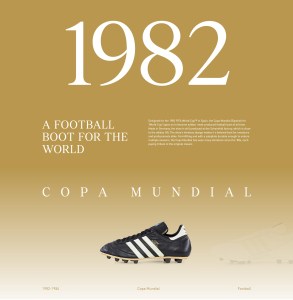
よかった、よかった。
というわけで、コラムの内容を再掲載させていただきます。
KING GEAR Archive VOL69 (2022/8/03)

英雄たちが愛した歴史的スパイクVOL.69 「コパムンディアルのデビュー当時について編」
今やサッカースパイク界の伝説の名品・アディダス・コパムンディアルですが、40年近く作られ続けていると、その登場時のことはずいぶんあやふやになっているようなので、それなりにちゃんとした解説を残しておきたいと思います。
いまさらコパムンディアル(コパムン)のスペックやすばらしさについて、あらためて語る必要はないと思います。ただ、昨今ではレフェリーか、一般シニアプレーヤーぐらいしか履いていない感じでしたが、まさに今現在、バリバリのトッププレーヤーでコパムンを愛用しているのが、浦和レッズの元デンマーク代表・ショルツ選手です(巻頭画像)。
他の選手がカラフルな最新モデルでプレーしている中、すこし異様にも見えますが、特に大ベテランという年齢でもないショルツ選手がコパムンを選ばれている理由をぜひ教えてほしいものです。
最近、スター軍団パリ・サンジェルマンが浦和と対戦しましたが、残念ながらショルツ選手は欠場していました(図1)。
コパムンを履いたショルツ選手が、世界最高峰の攻撃陣と対峙する姿を見れなかったのが残念でした。
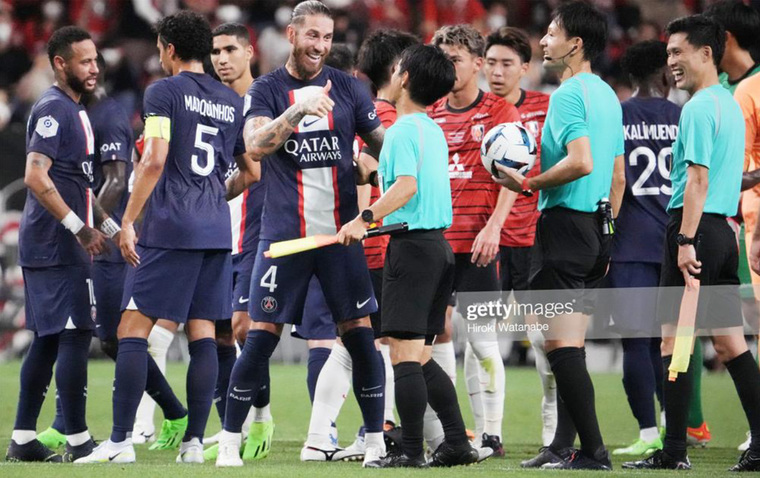
図1 ここにショルツ選手がいたらなあ…。今ではレフェリーもコパムン使用者は少ないようです。
さて、コパムンについてはキングギアでも何度か書かせていただきましたが、現行モデルは94年ごろに改良されて、現在までほとんど変化なく生産されています。
それ以前、特にデビュー時(82年ごろ)の西ドイツ製だったころは、いろいろ細かい変化があったことはこちらに紹介いたしました。 ただ、どうも登場した年については誤解があるようで、海外では「1979年」となっている場合が多いようです(図2)
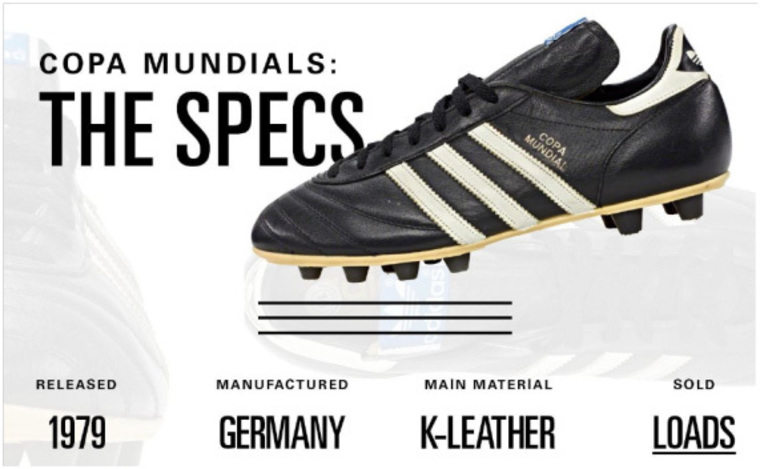
図2 「Released」は発売という意味もあるようですが、1979年にアディダスのカンガルー革の固定式はまだなかったと思います(訂正:WM-FINALというモデルが70年代半ばにありました)。
(この画像のようなかかとのマークは85年ぐらいからのモデルだと思います。初期はトレフォイルと「adidas」の文字入りで、最初期のシュータンマークは青地に白のトレフォイルで、その後、黒地に白のトレフォイルも加わったと思われます)
ウィキペディアにも1979年Releasedとなっており、引用先はこちらとのことです。 現行版タイプになった94年からですら、もう30年近く経っていますので、それ以前のことを知る人も少ないと思いますが、やはり間違っていることは正さないといけません。
最近、海外のスパイクマニアがこちらの記事を書いており、下記のような内容がありました。
「1979年に発売され、1982年のワールドカップスペイン大会のためにデザインされたこのシューズは、各代表チームのほとんどの選手が使用し、イタリアが世界チャンピオンに輝いた決勝戦のゴールの一つも、コパ・ムンディアルのマルコ・タルデリが決めた」
82年大会のタルデリ選手は全試合取替え式のアディスーパーソールの旧型「ワールドカップ」を使用していましたが、当時のスパイクについて詳しくない人がスペイン大会の画像を見たら、確かに多くの選手がコパムンを履いているように見えるのかもしれません(図3)。
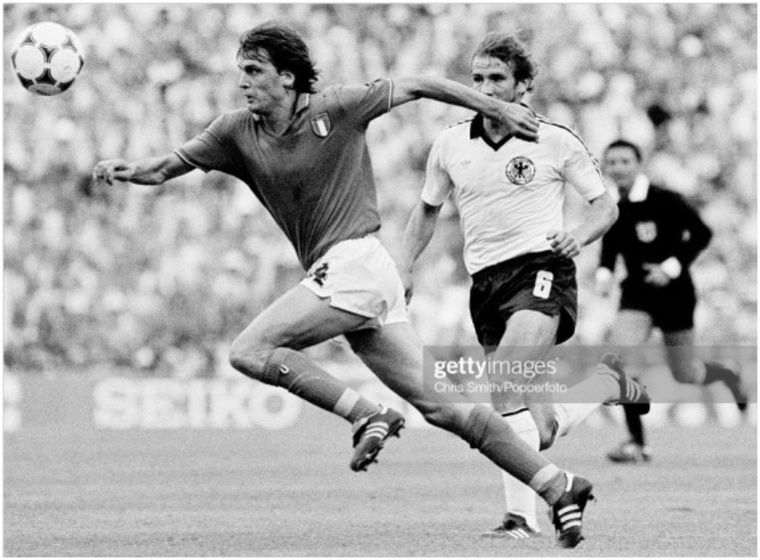
図3 82年W杯決勝のタルデリ選手(イタリア)。この大会のアディダス使用選手で取替え式スパイク使用率は8割以上だったと思います。
当時を知らない人が79年にコパムンがデビューしたと勘違いしてしまう大きな理由として、シュータンのマークが青い布地になったことが考えられます。
75年ごろにアディダス固定式のフラッグシップモデルの「ワールドカップウィナー」が発売されましたが、79年ごろに「ワールドカップ78」と同じシュータンマークになりました(図4)。
さらに、80年ごろに、アッパーはウィナーと同じで、新開発の「2マテリアルソール」を採用した「スーパーカップ」がデビューし、日本では釜本選手が愛用していました。 たぶん、コパムンデビュー前のウィナーやスーパーカップの存在を知らない人は、これらをコパムンと間違えてしまうと思います。
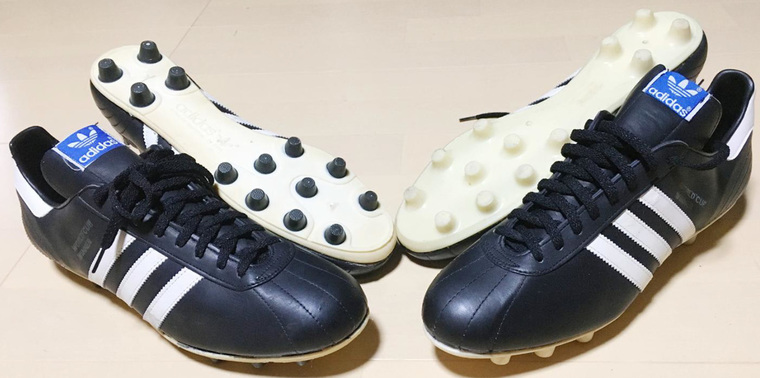
図4 ワールドカップウィナー(右)とスーパーカップのレプリカモデル(左)。実際のスーパーカップは側面に「SUPER CUP」と印字され、スタッドは12本の黒色です。
今では実にシンプルな作りのコパムンディアルですが、つま先の曲線の二重ステッチが横に入っているパターンは当時とても珍しく、おそらくそれなりに手の込んだ技術だったと思われます(図5)。
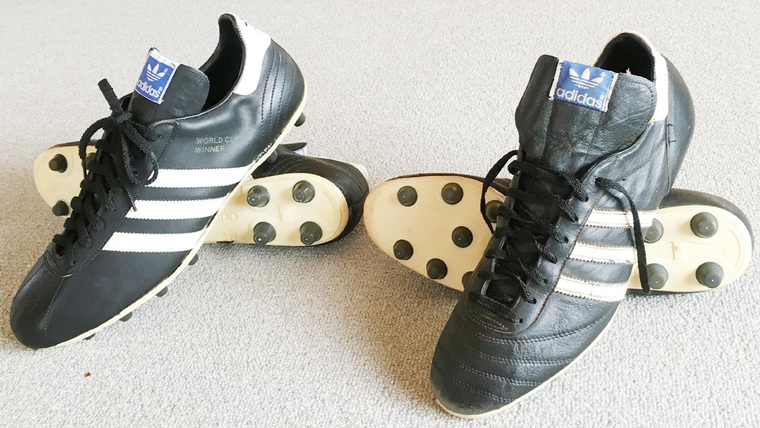
図5 スーパーカップレプリカ(左)と初期型コパムン。スーパーカップ、ウィナーはアディカーフ革で、繰返しですが、コパムンは当時アディダスの固定式では初のカンガルー革アッパーでした。
確かにコパムンは82年大会でデビューしたと思いますが、実際に使用していた選手はごくわずかだったと思います。
そもそも取替え式スパイク使用選手が圧倒的に多い大会で、アディダス使用選手の場合、特にそれが顕著でした。3マテリアルソールの新型ワールドカップもデビューした大会でしたが、図3のタルデリ選手のように、旧型ワールドカップがまだまだ大人気だったようです。
私が調べた限り、アディダスの黒スタッドの固定式を履いている選手がいたチームは、ペルー、ホンジュラス、エルサルバドル、ニュージーランド、チェコ、ハンガリー、イタリア、ブラジルでした。 いずれもチーム内では少数派でしたが、ペルー代表は試合によっては複数の選手が黒スタッドモデルを履いていました(図6)。
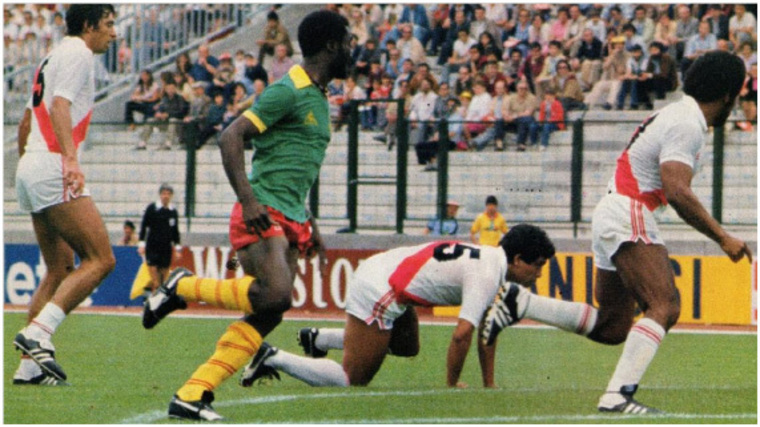
図6 82年W杯1次リーグ・ペルー対カメルーン戦。同じ画像にアディダスの黒スタッドの固定式スパイクを履いた選手が二人写っているのは珍しい大会でした。
ただ、黒スタッドのモデルがすべてコパムンだったかと言うと、当時の画像の解像度では判断するのがとても難しいです。 図5のように、スーパーカップとコパムンは革以外にも、つま先のステッチやかかとのつくり、3本線の太さなど違う点がいくつかありますが、試合中の選手の画像では正直みな同じに見えます。
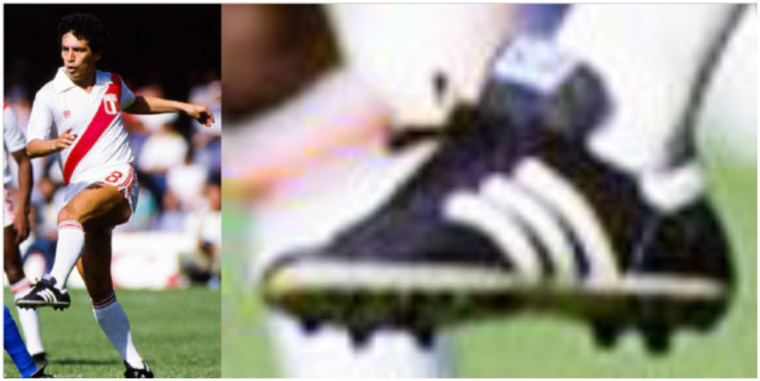
図7 ペルー代表クエト選手。かかとの作りからするとコパムンでしょうか?
優勝したイタリア代表チームもカブリーニ選手(図8)とオリアリ選手(図9)が黒スタッドモデルを履いていました。
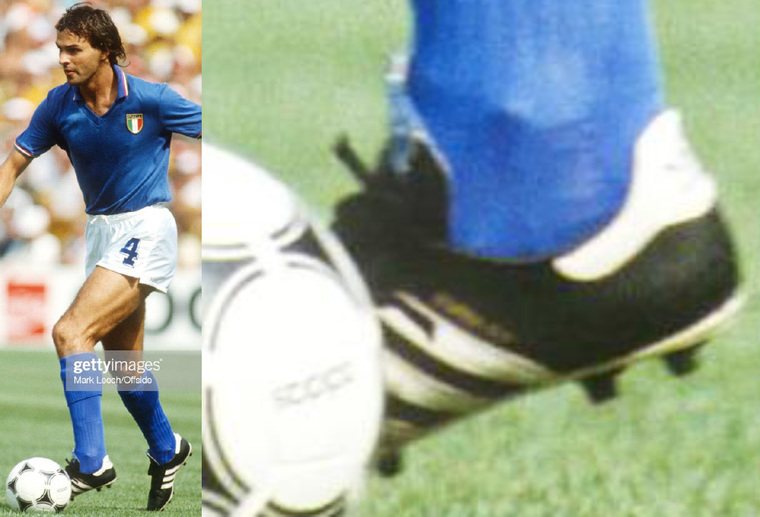
図8 2次リーグブラジル戦のカブリーニ選手。この試合のみ黒スタッドモデルを使用したようです。側面の字体やかかとの作りはスーパーカップに見えます。
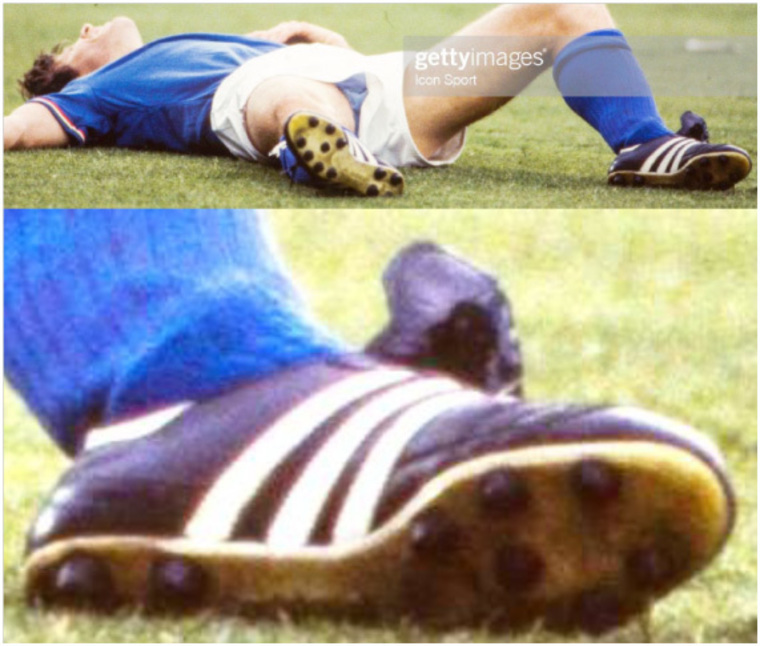
図9 決勝西ドイツ戦のオリアリ選手。この試合のみ黒スタッドモデルを使用していましたが、途中で取替え式に履き替えたようです。こちらはどちらかと言えばコパムンぽいです。
ちなみに決勝では主審も黒スタッドモデルでした(図10)。
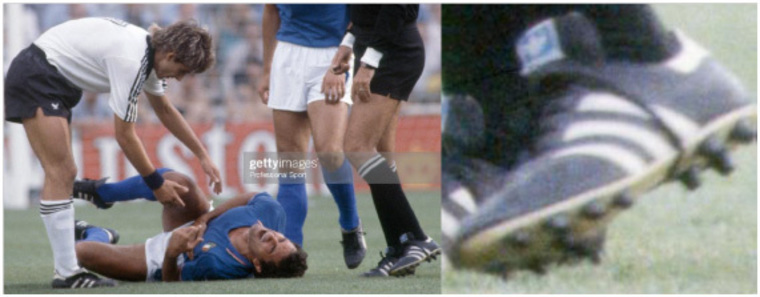
図10 決勝戦の主審のモデルは?スーパーカップかな?
ちなみに図10のリトバルスキー選手は新型と旧型のワールドカップ(取替え式)を併用していました。西ドイツ選手で黒スタッド使用者は皆無で、固定式愛用者(ブライトナー選手、ルムメニゲ選手、ミュラー選手)はいずれも白一色のアディパンソールモデルでした(こちらをご参照ください)。
スーパーカップは生産期間が短かったため、今では幻のモデルですが、海外ではもっとややこしいモデルが存在したようです(図11)。
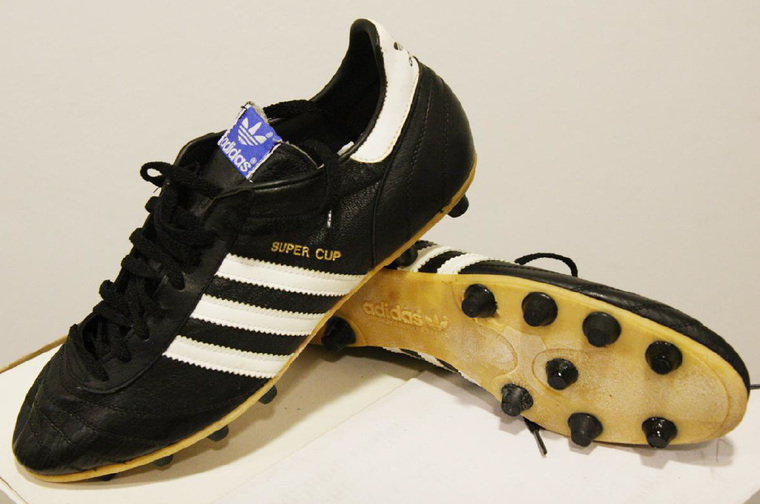
図11 イタリアのコレクターが所有するスーパーカップ。日本で販売されていたアディカーフ革モデルとは明らかに異なる仕様で、ほぼコパムンにそっくりです。これが82年大会で使われていたら、本当にコパムンと見分けがつかないでしょうね。
私にとってコパムンはとても大好きなモデルで、82年W杯でデビューしたことに異論はありません。 ただ、そのデビュー時のスパイク事情はとても混沌としており、それほど大々的に登場して、初めから絶賛されて多くの選手に使われたわけではありませんでした。
おそらく、昔のモデルと併用されつつ、徐々にトップ選手たちにその良さが浸透していき、固定式モデルの定番になったと思われます。
日本のアディダスファンは正しい歴史を発信していますので、私もこちらの年表に賛同したいと思います。
(写真はゲキサカ、サッカーマガジン、アフロ及びゲッティイメージズなどから転載させていただきました)
ショルツ選手は新天地でもコパムンを愛用されているようです。

Below is the English version of the above column’s content.
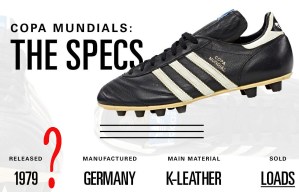
“Released” could mean “launched,” but I don’t think adidas had moulded studs model with kangaroo leather yet in 1979.
The current model of adidas COPA MUNDIAL was improved around 1994 and has been produced with little change up to the present.
Before that, especially when it was made in West Germany at the time of its debut (around 1982), there were various minor changes, which we introduced here. However, there seems to be a misunderstanding about the year of its debut, and it is often referred to as “1979” overseas.
Wikipedia also says adidas COPA MUNDIAL was Released in 1979, and the citation is here. Even since 1994, when the current version of the type was introduced, almost 30 years have already passed, so few people know about what happened before that, but I would like to correct what is wrong.
Recently, an overseas football boots enthusiast wrote an article here, which included the following
“adidas COPA MUNDIAL, released in 1979 and designed for the 1982 World Cup in Spain, were used by most of the players in each national team, and one of the goals in the final, in which Italy was crowned world champions, was also scored by Marco Tardelli in the adidas COPA MUNDIAL.“
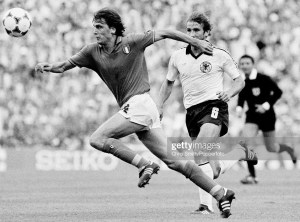
Fig. 3: Tardelli (Italy) in the final of the 1982 World Cup. I believe that the percentage of players using replaceable studs boots was over 80% among those who used adidas in this tournament.
In the 1982 tournament, Tardelli used the old “WORLD CUP” model with the changeable studs model with Adi Super Sole for all games, but if someone unfamiliar with the football boots of the time were to look at images from the 1982 World Cup tournament, it might indeed appear that many players were wearing adidas COPA MUNDIAL.
One of the main reasons why people who do not know the time may mistakenly believe that the COPA MUNDIAL debuted in 1979 is because of the blue fabric on the shoe’s tongue markings.
Around 1975, the Adidas moulded studs flagship model, the “WORLD CUP WINNER ,” was released, but around 1979, it had the same shoe’s tongue mark as the “World Cup 78” .
Furthermore, around 1980, the “SUPER CUP,” which had the same upper as the WINNER but with a newly developed “2-material sole,” made its debut and was used by Kamamoto in Japan. Probably, those who do not know the existence of WINNER and SUPER CUP before the debut of COPA MUNDIAL would mistake these for COPA MUNDIAL.
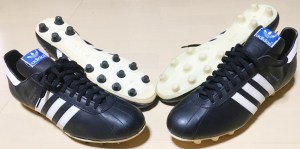 WORLD CUP WINNER (right) and a replica model of the SUPER CUP (left). The actual SUPER CUP has “SUPER CUP” printed on the side and 12 black studs.
The COPA MUNDIAL is now a really simple construction, but the pattern of curved double stitching across the toe was very rare at the time, and probably a very elaborate technique in its own way.
 SUPER CUP replica (left) and early COPA MUNDIAL model. The SUPER CUP and WINNER were in Adi-calf leather, and, to repeat, the COPA MUNDIAL was the first adidas moulded studs model with kangaroo leather upper at the time.
I believe the COPA MUNDIAL made its debut in the 1982 World Cup tournament, but I think very few players actually used it.
Although the new WORLD CUP boots with 3-material soles debuted at the event, the old WORLD CUP boots was still very popular, as shown by Tardelli.
As far as I could tell, the teams with players wearing adidas black moulded studs were Peru, Honduras, El Salvador, New Zealand, Czech Republic, Hungary, Italy, and Brazil. All were in the minority within their teams, but the Peruvian team had several players wearing the black moulded studs model in some games.
 Peru-Cameroon match in the first round of the 1982 World Cup. It was a rare tournament to see two players wearing boots with black adidas moulded studs in the same image.
However, it is very difficult to determine with the resolution of the image at the time whether all the black studs models were COPA MUNDIAL. As shown above, there are several differences between the SUPER CUP and the COPA MUNDIAL besides the leather, such as the stitching on the toe, the heel construction, and the thickness of the three lines, but honestly they all look the same in the images of the players in the game.
 Peru’s national team player, Cueto. The heel construction suggests COPA MUNDIAL?
The Italian national team, which won the championship, also wore black moulded studs models by Cabrini and Oriali.
 Cabrini in the second round league match against Brazil. It appears that the black studs model was used only for this match. The lettering on the sides and the heel appear to be SUPER CUP.
 Oriali in the final against West Germany. He used the black studs model only for this match, but he seems to have changed to the changeable studs model in the same match. This one looks more like COPA MUNDIAL.
Incidentally, the referee in the final was also a black studs model.
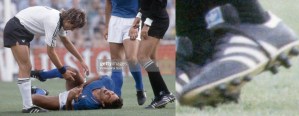 What is the model of the chief referee for the finals? Is it a SUPER CUP?
Littbarski in the above figure used both the new model and the old WORLD CUP (changeable studs). None of the West German players used black studs, and the moulded studs type lovers (Breitner, Rummenigge, and Muller) were all all white Adipan-sole models (see here).
The SUPER CUP is now a very rare model due to its short production period, but there were more complicated models abroad as shown below.
 SUPER CUP owned by an Italian collector. The specifications are clearly different from the Adi-calf leather model sold in Japan, and it looks almost exactly like the COPA MUNDIAL. If this had been used at the ’82 tournament, it would really be indistinguishable from the COPA MUNDIAL.
For me, the COPA MUNDIAL is my very favorite model, and I have no objection to its debut at the ’82 World Cup. However, the situation of football boots production at the time of its debut was very chaotic, and it didn’t make such a big splash and was used by many players with great acclaim from the start.
It was probably used in conjunction with older models and gradually became a standard moulded studs model as its merits spread among top athletes.
